Writers on Rural Japan
Japan Writers Conference
Tokyo, November 15, 2026
Panelist Biographies
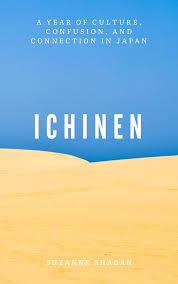 Suzanne Bhagan is a writer and educator. She is the author of Ichinen, a memoir that reflects on a year spent teaching in Tottori Prefecture with the JET Program. She is a regular contributor to GaijinPot and Savvy Tokyo. She has published fiction in We Mark Your Memory and personal essays about her life in Japan in Caribbean Beat. Originally from Trinidad and Tobago, she lives in Japan with her husband and twin sons and continues to write about life and motherhood in Japan.
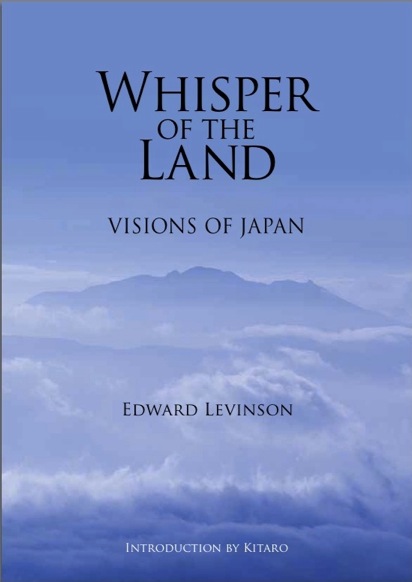 Edward Levinson is an award-winning photographer and short filmmaker, as well as an essayist and poet. Major publications include Timescapes Japan, featuring his pinhole photography; and Whisper of the Land, a memoir collection of essays and two books in Japanese. He is a member of The Photographic Society of Japan and The Japan P.E.N. Club. Living in Japan since 1979, he resides in a countryside paradise on the Boso Peninsula, Chiba Prefecture, inspired by his garden and surrounding nature.
Please visit http://www.edophoto.com or https://whisperoftheland.com/
 Iain Maloney is the author of nine books including two memoirs about Japan, The Only Gaijin in the Village and The Japan Lights. Originally from Aberdeen, Scotland, he lives in Gifu, Japan. He teaches literature and writing at Sugiyama Jogakuen University in Nagoya.
He can be found at www.iainmaloney.substack.com
 Thersa Matsuura is an American author, folklorist, and host of the podcast Uncanny Japan. She has lived in Japan for over thirty years, researching the country’s myths, legends, superstitions, and strange tales. Her books include The Book of Japanese Folklore, Legends of Japanese Mythology, and the upcoming Dark Tales from Japan. She is also the creator of a Japanese folklore-inspired Yōkai Oracle Deck and a consultant on David Dastmalchian’s comic series Knights vs. Samurai.
Please visit https://thersamatsuura.com/
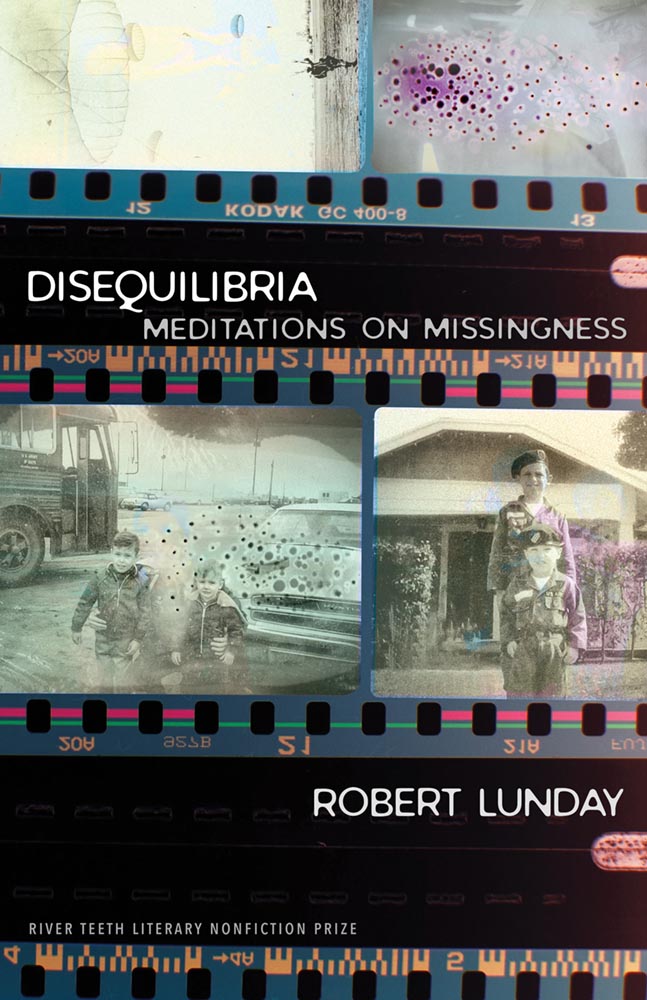 Robert Lunday (Moderator) is the author of Disequilibria: Meditations on Missingness, winner of the 2021 River Teeth Literary Nonfiction Award published in 2023 by the University of New Mexico Press. Gnome, a lyric essay, was published by Black Sun Lit in 2017. Mad Flights, a collection of short poems, appeared from Ashland Poetry Press in 2002. Lunday lives with his wife, Yukiko, in Kyushu, with four horses.
Please visit https://www.robertlunday.com
Representative Texts
Suzanne Bhagan, “The Memory Remains” [excerpt] from Ichinen: A Year of Culture, Confusion, and Connection in Japan:
In another glass case, a stained Shirley Temple doll and a black and white photo of a little girl dressed in kimono, clutching the doll close to her chest.
Wax figures run away from a simulated blast. Mouths open in horror. Skin melts off limbs. A lock of singed hair mounted against a white background. Shriveled fingernails.
Photos of hibakusha, those exposed to the bomb’s radiation. Closeups of scorched faces, blistered backs, buttocks, legs, and arms. Stories of human deterioration. Hair loss. Internal bleeding. Diarrhea. Birth defects. Cancer.
Before long, it becomes too much. How can I stop, stare, and move on without becoming viscerally affected? How can the Japanese hold on to such a dreadful past?
As a Caribbean person, I can’t understand this. Like many people from the region, I suffer from historical amnesia. Derek Walcott describes this beautifully in The Sea is History.
“Where are your monuments, your battles, martyrs?
Where is your tribal memory? Sirs,
in that gray vault. The sea. The sea
has locked them up. The sea is History.”
In Trinidad and Tobago, we love to forget. We raze old buildings and build new ones. We clear the landscapes and start afresh. Our relics are buried deep under the ocean bed.
Because of this, the sea becomes a repository of our history, particularly our dirty past of conquest, colonialism, slavery, and indentureship.
In Japan, however, it’s different. The good, the bad, and the ugly of history are still here. History is preserved in museums and monuments.
…
Edward Levinson, Whisper of the Land [excerpts]:
As a photographer, my challenge is to find the pockets of light, the fleeting moments that are constantly coming and going. It is not so different from the constant change in the garden, and looking for the best light to glorify flower or tree, the best time to plant and reap.
City-dwelling Japanese at times seem so far from nature; often their only consolation is to bring nature into their fabricated environment. Once, I came upon a full-scale pine tree installed in the basement of the Imperial Hotel as a New Year’s decoration. It looked so odd amid the jewels and silks of the gift shops, yet with soft underground lighting it was pleasing to the eye. To look at it while I sipped a ¥1,000 cup ($10) of Vienna coffee was an added bonus, but would you lock your child or your grandmother underground for a week or two, far away from any natural light?
…
Moving to the inaka (countryside) opened up new windows for seeing. The bounty of what I call pure nature blended harmoniously with the surrounding man-made satoyama landscapes. I roamed freely, camera in hand, immersing myself in an all-you can-eat photo buffet. In the beginning, there were no assignments; I did it for sheer joy and artistic expression. The hand of the good wife was pushing me forward, encouraging me to take photos to illustrate her work as an essayist. Already well known, Shizuka had an established fan base, who followed with interest our new lifestyle and creative works.
As my feet started getting cold and my mind started wandering, a fat old tanuki (badger) sauntered into the outdoor sanctuary. A Japanese folk tale says tanuki come to keep meditators from falling asleep, the ones who may have eaten too much. My mind left the formal ceremony and entered the head of this spiritual jokester.
The sacred world of tanuki is hidden, a bit like Superman hiding inside Clark Kent. Tanuki walk around looking lost and not very smart, sometimes in broad daylight, then when they get in a mystical party mood, become different beings where legends say they drink sake and play music by beating on their bellies.
Iain Maloney, The Japan Lights:
Elsewhere, in a book by Jared Diamond I think, I read about how our conception of the coast as a boundary, the edge, the end, is only a modern affectation. Oceans were highways. If you were travelling from Aberdeen to Edinburgh for most of human history you’d go by sea: it was faster, safer, easier. The coastline wasn’t the end, it was the beginning, the kerbstone, your front gate. Trains, cars, planes: we’ve lost this sense. I started imagining the map from this new perspective, maps that begin at the edge of land, from the north-east of Scotland, a road atlas of the deep. From Aberdeen, from this perspective, south becomes less relevant: east is the thing. The North Sea as a highway, a connection. Norway, Denmark, Sweden and Finland. I’d spent my life thinking everything was south of Aberdeen. Flip the map, shift the focus from land to sea, and there’s a brave new world. Flip the map, shift the focus from land to sea, and there’s a brave new world.
…
Writing The Only Gaijin in the Village also churned these ideas as I tried to make sense of how I’d gone from a commuter town outside Aberdeen to a rural community in Japan. That book was an attempt to explain to myself who I was and why I felt more comfortable in Japan than in Scotland. Doing so involved pulling on a lot of these threads, one of which was the great history of migration, of exiles, the differences between expats and immigrants, between those who move because they want to and those who move because they can.
…
Mishima set The Sound of Waves on one of these islands, one of his best books. Islands are a storyteller’s friend. Mysterious, small enough to encompass the imagination but pliable enough to support any twist in the plot.
…
I always feel bad taking the highway, the voice of Robert M Pirsig, author of Zen and the Art of Motorcycle Maintenance, in my ear, explaining how highways bypass real life, lift you up and over all the things you’re travelling to see. Highways are about reaching the destination as fast as possible; roads are about the journey.
Thersa Matsuura, “The Screaming”:
She was screaming again. Sadayori stood on tiptoe, belly pressed against the bamboo fence that separated the paddock from the meadow and forest beyond. He squinted into the pale blue summer sky. He knew exactly which one it was, the one they called Hayate, a northern goshawk that belonged to one of Takeda’s falconers. They must be training today.
She was usually so easy to spot, even at a distance. Not just by her magnificent wingspan but also because she wore the long purple ribbons she’d won by excelling at catching prey. The hawk screeched again. Closer. The horses behind him shifted uneasily and snorted, hooves thudding as they closed in and nudged his back.
Why couldn’t he see her? Sadayori leaned forward a little more, but the bamboo creaked and split. He fell and felt a burst of pain like being kicked in the gut by that one mad horse last year. He squeezed his eyes shut and listened as the pleasant buzz of cicadas curiously thinned into the relentless hum of flies.
When he opened his nearly crusted-shut eyes again, it wasn’t summer anymore. He wasn’t a boy at the stables, and the sky above him wasn’t watered-silk blue but a savage shade of red. He was lying back against something, half sitting. He couldn’t feel his legs. What had happened to his legs? One protesting arm responded. He untied the cords under his chin and used the heel of his hand to push the kabuto helmet off. Wind moved through long grass. Smoke rose. Somewhere far off a man groaned; another whimpered.
He tried to move again, but the pounding pain in his stomach stopped him. The smell of trampled earth and spilled bowels and the iron tang of blood in his throat made him cough and gag, which sent new knives through his guts.
The battle. He now remembered readying for it in the chill of pre-dawn, the men trembling, nervous laughter, only auspicious words uttered. Methodically donning his own armor, then checking his horse, Kumoji. Having grown up raising and caring for the animals alongside his mother, he rarely trusted any of the horse handlers with her. He would rather have spent his days brushing her coat and picking stones from her hooves. He also disliked being around the other men, with their forced bravado and pride. He preferred the honest, loyal, gentle company of his best friend. Kumoji.
Sadayori clenched his teeth through the twisting ache in his stomach and looked down. The chestnut mare’s head rested heavily on his legs, bobbing slightly as she took in short, shallow breaths. She screamed again. No! He reached down and fumbled with the braided silk ties of her leather headpiece, carefully pulled it off. Kumoji’s lips curled back, nostrils flaring.
Sadayori stroked the horse’s wet nose and spoke her name over and over. “Kumoji.” Her dark glassy eyes, wide with fear, looked up at him. The recognition steadied her breath just a little. She pulled a foreleg to her chest, strained to lift her head and roll so she could rise again, fight again. The effort shuddered through her. Her body refused. Sweet, sweet Kumoji.
A Partial Bibliography of Nonfiction Books on Rural Japan
See above for information on books by our panelists. This list focuses on non-Japanese authors and a selection of available works translated works into English by Japanese authors. Japanese names are given with surname last on this list (apologies). This is an incomplete list mainly due to my fragmentary knowledge of the subject; apologies again if it is missing your favorites. Please send me suggestions for titles to add! Poetry and Fiction will be added, someday….and films?
General Nonfiction:
Karen Hill Anton, The View From Breast Pocket Mountain: A Memoir (2020)
Sam Baldwin, For Fukui’s Sake: Two Years in Rural Japan (2011)
Alan Booth. The Roads to Sata: A 2000-Mile Walk Through Japan (1985)
Booth, Looking for the Lost: Journeys Through a Vanishing Japan (1996)
Amy Chavez, Running the Shikoku Pilgrimage: 900 Miles to Enlightenment (2013)
Chavez, The Widow, The Priest and The Octopus Hunter: Discovering a Lost Way of Life on a Secluded Japanese Island (2022)
Sarah Coomber, The Same Moon: A Memoir (2019)
John Dougill, Off the Beaten Tracks in Japan: A Journey By Train from Hokkaido to Kyoto (2023)
Lesley Downer, On the Narrow Road to the Deep North: Journey into a Lost Japan (1990)
Will Ferguson, Hokkaido Highway Blues (1998)
Bruce Feiler, Learning to Bow: Inside the Heart of Japan (2004)
Alex Kerr, Lost Japan (1993), Hidden Japan: An Astonishing World of Thatched Villages, Ancient Shrines and Primeval Forests (2023)
Elizabeth Kiritani, Vanishing Japan: Traditions, Crafts, & Culture (1995)
Craig Mod, Things Become Other Things (2025)
Rebecca Otowa, At Home in Japan: A Foreign Woman’s Journey of Discovery (2009)
Richard Lloyd Parry, Ghosts of the Tsunami (2017)
Donald Richie, The Inland Sea (1971)
John Grant Ross ed., Inaka: Portraits of Life in Rural Japan (2020)
Junichi Saga, Memories of Silk and Straw: A Self-Portrait of Small-Town Japan (trans. Garry O. Evans, 1987).
Oliver Statler, Japanese Inn (1961), Japanese Pilgrimage (1983)
Bokushi Suzuki, Snow Country Tales: Life in the Other Japan (trans. Jeffrey Hunter and Rose Lesser, 1986)
Andrew Thomson, Bridge to the Gods: Tales from Kyushu (2018)
Scholarly Works:
Richard K. Beardsley, Village Japan (1960)
Gail Lee Bernstein, Haruko’s World: A Japanese Farm Woman and Her Community (1983)
Ronald P Dore, Shinohata: A Portrait of a Japanese Village (1978)
John F. Embree, Suye Mura: A Japanese Village (1939)
Tadashi Fukutake, Japanese Rural Society (trans. R. P. Dore, 1967)
Tsuneichi Miyamoto, The Forgotten Japanese: Encounters with Rural Life and Folklore (trans. Jeffrey Irish, 1960/2010)
Edward Norbeck, Takashima: A Japanese Fishing Community (1987)
Robert J. Smith, Kurusu: The Proce of Progress in a Japanese Village, 1951 – 1975 (1979); with Ella Wiswell, The Women of Suye Mura (1982)
John Traphagan, Cosmopolitan Rurality, Depopulation, and Entrepreneurial Ecosystems in 21st-Century Japan (2021)
Selected Readings on Rural Japan
Below, in no particular order, I’ve assembled some passages from nonfiction works about rural Japan, highlighting the ways each passage responds to a particular theme or makes use of a particular writing strategy.
Rebecca Otowa, At Home in Japan:
The house was a member of the family. It spread its wings of benevolence and security over the heads of the people in the picture.
Much of Otowa’s memoir is about the house and home, and the domestic activities within the home over an extended period. Often, process analysis or intensive description (enargeia) are the chief forms of development. In this two-sentence passage, though, I am interested simply in the way she personifies the house, fusing emotional and physical properties in a manner that will recur in the book.
The following extended passage of focused description is a good example of the ways Otowa reveals much about Japanese culture through a singular focus, but with varied rhetorical devices.
“Bamboo”
It soars, it rockets, in strong shallow curves endlessly repeated yet delicately different. It rustles, it whispers, it clacks like musical instruments from another world. It nods, it tosses, shaggy as the heads of Chinese festival lions. It streams, it billows, like storm-soaked ocean waves. Exotic as a unicorn, common as mud—it’s bamboo.
One of the most venerable calligraphy panels in our house proclaims, in nearly incomprehensible script: “Look out of the gate, there is bamboo.” And there is. At the southern edge of our property is a small stand of bamboo, decimated by a road-building project years ago but still graceful as ever. It reminds me every day that I live in Asia, where bamboo grows side by side with pine, both unchanging green, whether seared by sunshine or covered with snow.
Bamboo is a gorgeous plant—a fantastic, graceful giant grass, the stuff of dreams—and its role in our lives goes far beyond the aesthetic enhancement of the view. Bamboo has been called the most useful plant in the world, and this usefulness ensures that it is always a part of the rural scene in Japan. When young, the dark, fuzzy cones of the shoots— takenoko, “bamboo children”— can be peeled, cut and cooked in a complicated process that results in one of the favorite delicacies of spring. When it grows into a long, subtly tapered jointed stalk, it can be brought home and put to work in a variety of ways— as supporting sticks for climbing plants, and as rods to hang the laundry or reach the highest-growing persimmons or prevent snow damage to the roof tiles. Because of its lightweight flexibility, it can be made into all kinds of things—flutes, drums, wind chimes, chopsticks, tongs, spoons, cups, baskets, pot trivets, mats, furniture, incense holders, fans—the list goes on and on. Bamboo is also amazingly durable. Simple flower vases, fashioned by legendary craftsmen and aesthetes of old, have been cherished in museums and collections for hundreds of years. Traditional houses have bamboo lattices built into the walls between the beams to support the plaster. We are using bamboo laundry poles in our house that have been in place since long before I came. It is everywhere around the home, its initial fresh green mellowing to lovely ochre, then to soft grayish brown.
In country lore, a bamboo grove is said to be the safest refuge in an earthquake. The earth here is crisscrossed, under the whispering layer of dry leaves, with a maze of hardy roots that resemble flexible plastic pipe. No matter how steep the slope, the ground never slides or erodes. There is no undergrowth in a stand of bamboo, so that the eye is hypnotized by the mysterious sameness of the shifting verticals. Look up and you seem to be at the very center of a fountain, the stalks shooting skyward on every side till they explode in a firework of blinding green blades. Glance often at the leaf carpet underfoot, and put your hand to the smooth cool curve that fills your palm as satisfying as an egg, to keep from growing dizzy at the sight of joint after joint marching upward, zigzagging from pole to pole.
An especially fascinating piece of bamboo lore is that each species has its own timetable, measured in years, of setting seed; and all over the world, like a thought traversing a giant brain, the bamboo of one species will flower at the same time. In our area, every few years the normally fresh, grassy green of the bamboo forests will fade to an eerie, somber grayish ochre, which is the color of the flowering. The following year everything will be as before.
This astounding plant has many admirers. Those that have concern for our planet love bamboo, which is fast-growing, inexpensive, and prolific, and can substitute for precious trees in many applications, including paper and fabric. Botanists find it fascinating because it grows in many subtly different colors and forms, large and small, green, golden, black, striped, and spotted. Gourmets eagerly await the tender new shoots of spring, with their nutty flavor and crunchy texture, to use as an ingredient in evocative seasonal dishes. Craftsmen praise its versatility and the lovely warm color which blends so beautifully into a Japanese interior. Music lovers know that bamboo is the purest and simplest of flutes, and the haunting, softly floating timbre of the shakuhachi or the shrill piercing cry of the fue are the very essence of traditional music.
Indeed, bamboo is many things to many people. But for me, the otherworldly exotic beauty of it is the point where it enters my soul. I’m living in a place where I can look out of the gate and see bamboo.
This brief passage of definition is an insightful observation demonstrating the power of observation, but also in connection with cultural theory:
The love of whiteness — of paper, rice, bread, young girls’ skin; the elaborate roofed basin at the entrance to a shrine, surrounded by people waiting their turn to rinse their hands and mouths before praying; the sumo wrestler tossing handfuls of salt into the ring before a bout — all are symbols of the national quest for purification.
This extended passage is a trope of its own within the larger trope of the Home; it combines process analysis, intensive description, and cultural theory in a way that I think is illuminating to two types of reader: those who are already somewhat familiar with Japanese culture, and those who are novices.
“Changing the Doors”:
Everyone knows that a wall is an immovable barrier which keeps things and people in or out, and that a door is a conduit or portal where movement from one space to another is either permitted or restricted. A wall never becomes a door, or a door a wall. They are separate entities with contradictory functions. These are the semantic imperatives that I absorbed in my childhood world of American suburbia.
Coming to Japan, in many ways, forced me to notice the arbitrary nature of words in deciding How Things Are. My house now is just as much of an entity as my childhood ranch-style four-bedroom bungalow was, yet the paradigms, the assumptions of psychological priorities, are completely different. The interior “walls” consist entirely of sliding doors, in sets of four, which may be opened at any point or even removed bodily to suit the immediate functions of the rooms themselves. In the designs of these doors I can read the interior decorating tastes of succeeding generations of residents: they are fashioned of wood, paper, glass, and reeds, in different combinations, with everything from simple lattice-work to busy, over-conceived geometrical shapes. Whatever their appearance, however, their basic structure is the same—they have only the most rudimentary handles, and of course, no locks. Are they doors at all, in the sense I have always understood the word? In conjunction with the all-purpose nature of most rooms and their lack of furniture or impedimenta, the distinction between door and wall is, for the most part, nonexistent. It’s a freestyle way of living that I’ve come to like, the big clean spaces, floored with tatami that is easy on the feet, ceilinged with remote dark wood slats, and in between, these doors, properly called tategu (“standing things”).
The material of the doors varies with the seasons. In June, the dark, solid winter doors are exchanged for lighter ones made of reeds that allow the free flow of cooling breezes. Oh, but the word “exchanged” cloaks a long procedure—hauling the summer doors out of the storehouse where they are kept; wiping them down; removing the winter doors and carrying them to the storehouse; and finally puzzling out which summer door goes where. (They all look the same, but are marked on the top edge with cryptic directions such as “Outer East”, which if ignored will result in misaligned and emphatically non-sliding doors.) A complete koromogae (door-changing) entails the shifting of thirty-four units of tategu. But troublesome though it is, this exchange of doors, whether in spring or fall, gives the house a feeling of freshness, and oneness with the season, that is hard to achieve in many Western houses.
The most common interior doors are shoji and fusuma. Both are wood frames with paper glued on. Again, this sounds simple, but there is a wealth of activity hidden in that word “glued”. Shoji paper is white and relatively flimsy, but surprisingly efficient as a heat insulator. It tears easily, and a torn shoji door is like a chipped cup—the eye is inevitably drawn to the imperfection. Also, the pristine whiteness of the paper tends to grow dull with the passage of time, so that shoji must be renewed when necessary in a process of washing and drying the frames, and measuring, cutting, and gluing the paper. The glue is semitransparent mucilage traditionally made from rice. Fusuma are double-sided, opaque doors made of heavier paper which is often decorated with ink paintings or calligraphy. But it’s still paper, it can still be damaged by a careless broomstick or a skittish cat, and will require repair of a more complicated kind.
Most other doors in the house are made of wood, sometimes with frosted glass inserts, and their maintenance is a simple matter of dusting. Simple? Dusting? Again, these are misleading words. The average door has between ten and thirty separate and distinct horizontal ledges, each of which must be wiped with a damp cloth wrapped around a finger. The dark wood shows dust easily, both dust that blows in from outside and dust that filters down from the centuries-old ceiling. It’s a never-ending task, or perhaps it just seems never-ending, when fingers grow numb and puckered in the chill of the winter “big cleaning” time.
Writing this, and thinking about the doors in my home, it strikes me how full of nuance, how nebulous in meaning, how bound by culture, each word in a language is. For me, a closed door implies privacy; but there is no indigenous word in Japanese for “privacy”, and when I consider what doors, walls, and rooms mean in this culture, I understand why.
Of course, understanding is one thing, and getting used to it was quite another; but the semantic adventure has softened the psychological stress. Throwing meaning to the winds— rediscovering every day that physical objects are no more and no less than the definitions we give them—is an experience both unnerving and liberating. And no matter how long I live here, I probably won’t come to the end of it.
Amy Chavez, The Widow, The Priest and the Octopus Hunter:
This is a great example of topophilia, or love of place; or energeia, which is intensive description and evocation of detail. The ordering is expansive, but also anchors our perceptions in the human – not centering it there, but providing the human perspective that gives meaning to the landscape and its history, while also, in the subtle figurations, giving us insight into the persona who makes these observations.
While evenings are marked by the riplets of the tide, the mornings are still, as if time’s relentless pull forward has been stayed. The tide now high, between my house and the opposite side of the port is only water, placid as morning dew. This shadow pond mirrors everything above it: the amber sky, a passing gossamer cloud, a seagull circling figure eights. In these early hours life is reflected, duplicated and copied a thousand times a minute, in burst mode, recording a life of softer lines and breathtaking quietude. It is a temporary lull, and my favorite time of day.
By now I am standing downstairs in the living room with the windows open. I watch as the curtain of light creeps down the side of the mountain, having dropped below the treetop herons. As the sun inches its way down through the shroud of darkness, the outline of Bikuni Rock looms ominously, casting a craggy, creeping ghost shadow of itself onto the mountain opposite. Shiraishi means “white stone” and refers to the rocks like Bikuni that dot the mountainscape. It goes without saying that if there are so many boulders on top of the mountain, there are just as many along the shoreline. These wave-worn behemoths encircle thousands of islands in the Seto Inland Sea, their imposing presence a defense against the vagaries of winds and waves. My small house on the breakwater was constructed on top of such boulders, some of which had no doubt fallen from above sometime in the past. Their inevitable plummet is predicated by centuries of typhoons and landslides that have, and always will, encourage the mountain to shed its accessories. Occasionally still, a boulder plows through someone’s living room.
A cormorant standing on the gunwales of a fishing boat wiggles its behind and opens its wings to dry them in the anticipated warmth of the sun. Wings stretched, he rocks from foot to foot, moving to his own rhythm, twitching his tail feathers as if Japan’s mythical sun goddess herself has just pushed open the door of her heavenly rock cave to bring light into the world. Now, the magic is about to happen.
When the sun’s warmth hits the cooled night air cradled between the mountain walls of the port, this cool air mass begins to move. The newly warmed air expands, pushing the cool air into a single-pulse breeze that rushes across the water’s surface to my side of the port where it blasts through my living room window. The effect lasts mere moments, but this swelling, surging billowing of cool air is one of the natural miracles that happens every day on this small island.
This brief passage is an example of definition/distinction:
For me, moving to Shiraishi was a chance to get up close and personal with island traditions, superstitions and folklore. I gradually began to realize that island life is a niche lifestyle under the wider genre of Japanese countryside living. Here, each season gives way to preparations for a festival, ceremony, planting or harvest, just like anywhere else in the country side, but what marks our uniqueness is the isolation. Community bonds of village life are strong and no caprices escape unnoticed on this scrap of land hemmed in by shallow seas. The briny borders have preserved the island like a jar of pickles; traditions here have survived decades longer than their mainland-village counterparts.
The following is a humorous anecdote that combines brief process analysis with dialogic scene. It also illustrates an example of vanishing/persisting tradition, if I can put it in paradoxical terms – which I think is particularly apt for some of the ways Japanese traditions both change and stay the same in the countryside.
As we’re talking, a youth group is holding an event on the beach in front of the Otafuku inn. The activity is called jibiki-ami. It works like this: the Fish Trapper brings his boat up until it just noses the beach, then turns it about face in the other direction, towards the sea. While the boat idles, he stands at the stern and throws out the end of a long net to an adult standing on the beach. He shifts the boat into gear and, as he steers very, very slowly into a large arc, he lays the long fishing net into the water. The net has light weights strung across the bottom and small floats along the top to keep the net standing. He finishes the arc 50 yards (50 meters) down the beach and hands the other end of the long net to another adult. The net billows out in a semicircle from the shore.
The young people standing on the beach now split into two single-file lines of about twenty kids each. They all grasp an end of the net as if they’re playing Tug of War. Both lines of kids start pulling on the net to bring it in. Each line walks backwards as their team pulls and pulls. The net is heavy, but they keep pulling. And pulling. When they’ve finally dragged the net back up onto the beach, they are treated to a bevy of unsuspecting fish that have been swept up in the net and are now flopping around on the sand. Hundreds of less desirable bait fish get caught but the kids have lassoed some big fish too. And some huge ones as well. This favorite beach pastime is topped off with a seafood barbecue prepared by the kitchen staff at the inn.
Noticing their catch, I say, “It seems like a lot of fish go to waste in that event. I’m sure they eat the big fish, but what happens to the hundreds of small ones that no one wants?
The Boat Captain takes a swig of his beer and says, “But with jibiki-ami, they put the fish into the net.”
“What?”
“The Fish Trapper. He puts the fish in. He’s my classmate.”
“You’ve got to be kidding!”
“Surely you didn’t think that with just one net thrown out there they could catch that many fish?” He gives a belly laugh.
“I did think that!” I’m still astonished, but also laughing now. “Do the kids know?”
“I doubt it. But when the Fish Trapper takes the net around in the semicircle with his boat, he’s not just putting the net in, he’s dropping big fish into it too.”
“But years ago they didn’t add fish did they?”
“Nah. But nowadays when people come to the island to do jibikiami, they have to make sure they catch a lot of fish to please them.”
Karen Hill Anton, The View From Breast Pocket Mountain:
This passage combines cultural exposition of various elements with scene and character development and slight process analysis:
On that first day, the owner introduced us to our closest neighbors, a family named Ōishi. And then we went a little farther uphill to meet another family also named Ōishi. I’d learn that almost all the families in that area shared the same last name, and they were not all related.
The Ōishi family up the hill had three children, and it was our good fortune that the eldest, Hiroko, was a girl Nanao’s age, and also a first-grader. Hiroko’s mother and I soon agreed we’d take turns driving Nanao and Hiroko down the hill to catch the morning bus to the local school. They’d walk back. Nanao did that for all of her elementary school years. Arriving home rosy-cheeked, she never complained once. She may have thought most children walked more than an hour uphill to get home from school.
I didn’t think I’d ever get used to calling our next-door neighbor Ōishi-san, and his wife the same thing without variation. I learned that because she was older than me, I could address her as Oba-san (aunt). I could also call her Oku-san (wife). Since many people in the area shared the same last name, it was also permitted to call her by her first name, Setsuko. Nanao called her Obaa-san (grandmother).
Ōishi-san, the husband, a man of perhaps sixty, was up long before daylight. Agile in a pair of jikka-tabi, the split-toe shoes farmers wear, he plowed fields, climbed trees, and carried farming implements up and down the stone path our houses shared. Setsuko didn’t appear to be quite as old, but she moved slowly, deliberately, as she carried out her myriad daily chores. As if too much at one time wouldn’t do us any good, Ōishi-san would every now and then give us bits of information: The stone path is treacherous, especially when wet. Weasels can get in through the roof and we should make sure there are no openings. And he promised Billy he’d take him to dig for jinenjo. This fabled mountain potato, an alleged aphrodisiac, could be found in the nearby woods—its distinctive heart-shaped leaves pointed to the unseen roots.
And so, following Ōishi-san’s instructions, Billy reconstructed the kotatsu, lining the pit with red clay he first mixed with straw. Ōishi-san made all the sumi (charcoal) his family used, and in an arrangement reminiscent of earlier times, with no money changing hands, we established a fine barter system. In return for keeping us supplied for our kotatsu, we drove him on his occasional errands, and sometimes took his elder brother to doctor appointments.
Alex Kerr, Hidden Japan:
This is a detailed polemic anchored in historical review combined withcause/effect and process analysis; also, of course, the argument is within the general frame of eco-criticism.
Since the late 1940s the mountains of Japan, from Honshu down to Kyushu and Shikoku have been replanted with monoculture plantations of sugi cryptomeria and hinoki cedar. These evergreens, with their dull uniform foliage make the mountains monotonous and gloomy. It’s a completely different landscape from the hills celebrated in old poetry and screen paintings.
Foreign travelers are to be forgiven for not realizing that the forests they’re looking at are drastically changed—and all quite recently. Here’s a guide to the difference. Sugi and hinoki are evergreens, called in Japanese shin’yoju, which means “needle leaf trees.” The native forest is overwhelmingly koyoju broadleaf deciduous trees. You can see the difference in the color of the forests. The sugi and hinoki are a uniform darkish olive. But the broadleaf forests scintillate with an ever-shifting spectrum of different shades of green.
The broadleaf trees allow light to penetrate to the forest floor, and their fallen leaves fertilize the soil. Within these forests flourishes a riotous jungle of undergrowth, vines and moss. Inside the monoculture plantations, perpetual shadow ensures that nothing except a few ferns will ever grow.
Apart from the color and the fluffiness of the broadleaf forests, another easy way to tell what you’re looking at is to see if the trees have grown naturally or stand in nice straight lines. Those striated hillsides with pencil-thin trees growing in rows are planted with sugi and hinoki. Oddly enough, many travelers, including even many Japanese never seem to question whether forests naturally grow this way. They gaze out at a mountainside covered with rows of trees planted in perfect lines and sigh, “Ah, immemorial Japanese nature.”
Sugi and hinoki (especially sugi) are favorite government projects so they come with a lot of officially sponsored propaganda. “In 1945 Japan’s mountains were denuded after World War II, so that’s why we had to start replanting.” Not true. In my childhood in the 1960s, and later when I hitchhiked around Japan in 1971, the original forest all around the country was mostly still intact. The big reforestation projects took place after the 1970s, picking up steam in the 1980s—and are continuing now. “Sugi is a hallowed element in traditional wooden construction.” Not true. In my work of restoration of old houses, I’ve seen hundreds of houses across the country, and never once have I come across an old house made of sugi. It just didn’t happen.
Wild animals can’t live in the sugi death forest, so they descend into the villages where they wreak havoc with farmers’ crops. The shallow roots of the sugi allow for fast erosion, which fills the streams with silt, which leads to more building of dams and riverside erosion walls. Sugi and hinoki grow tall and thin, and are pruned to have few or no lower branches. So when a typhoon or heavy rains come, the trees tip over en masse, and with their shallow roots the plantations are prone to landslides.
Finally we have the sugi pollen which afflicts tens of millions of Japanese with severe allergies every spring. In the spring you can see great clouds of pollen rising from the hills. For many this triggers lifelong allergic illnesses, and in fact Japan’s population now suffers from some of the highest allergy afflictions in the world. The cost of treating these allergies alone wipes out any economic benefit that the sugi might bring.
The problem is not sugi per se. It’s an important tree for Japan, a sacred tree for shrines. But with the postwar plantations, sugi outgrew its natural balance. From being a benign local tree, it became a damaging invasive species. At this point about 40 percent of Japan’s total forest land has been covered with sugi and hinoki. Hokkaido, perhaps because it’s so far north, has fewer plantations. Remove Hokkaido from the calculation, and the figure of 40 percent likely rises to over 60 percent for the rest of the country. Despite the environmental, economic and cultural disaster that is sugi, the government, once set on its ways, cannot turn back. So the project continues despite nobody having any idea what to do with all this unsellable and unusable sugi.
As for what the forests look like, the replanting has been done in patchwork fashion. It’s not as if there are wide expanses of native forest, and then big areas of plantations. It wasn’t carried out according to a master plan, but simply according to who accepted the government subsidies for planting first. Some landowners planted early on, others later or never. It’s all mixed up, so when you look at typical mountain scenery, you’ll see a patch of plantation over here, then some native trees and then another strip of plantation over there and so on. Finding an unimpaired native forest is difficult, because there’s bound to be a patch cut out and planted with sugi or hinoki somewhere. You see this vividly in the autumn, when the patchwork reveals itself as a sea of olive green interspersed with occasional strips of red and yellow.
Kerr, Lost Japan
This is a succinct and vivid depiction of the broad, societal trend of rural depopulation.
When a family decided to leave their house for the big city, they would take practically nothing away with them. What good were straw raincoats, bamboo baskets and utensils for handling firewood going to be in Osaka? Everything that had been a feature of life in Iya for a thousand years had become irrelevant overnight. On entering one of these houses, it looked as though the residents had simply disappeared.
The following scene has several interesting elements, but the one that I most admire is the way the tobacco is a figure for time’s transformations.
Mr Takemoto helped me pace the lot to determine exactly where the boundaries were. Then, with the help of Shokichi and his friends, we began cleaning and renovating to make the house livable again. First, we swept the floor. This was not as easy as it might sound, since it was completely covered with five centimeters of powdery black soot. This we gathered into a pile in the garden and burned. But as the smoke began to rise, we suddenly realized that the powder was not soot at all. It was tobacco! During the seventeen years that my house had been abandoned,
the tobacco leaves hanging in the rafters had gradually disintegrated and settled on the floor as dust. Unwittingly, that day I burned several pounds of precious tobacco, more than enough to pay off the entire debt for the house.
This passage also captures the passage of time while rendering the transformations in a more human way.
No antiques of any value came to light in cleaning the house, but the former occupants had left all the objects of their daily life undisturbed, and in these could be read much about the lives of Iya’s people. Most remarkable was the diary of a young woman who had lived in the house with her grandparents in the 1950s. In her diary, the poverty of lya, the gloom and darkness inside the house, and the girl’s desperate yearning for city life were frankly and tearfully recorded. About the time she turned eighteen, the diary came to a sudden end. The villagers told me she ran away from home. Her grandparents wrote ‘The child does not return’ on a piece of paper and pasted it upside down on the door as a charm to bring her back. It failed, but the slip of paper remains on the door to this day.
This descriptive passage, in part through cultural contrast, captures the essential topographical form of Japanese villages; but also shows the interesting exception of Iya.
Every country, I believe, has its typical ‘pattern of landscape’. In England, the keynote is grass – in town squares, in meadows and in college quadrangles. In Japan, it is the village cluster. Usually, the houses of a Japanese village huddle together in a group on the flatlands, either in a valley or at the foot of a hill, surrounded by an expanse of rice paddies. People do not live up in the mountains, which in ancient times were the domain of gods and considered taboo. Even today, the mountains of Japan are almost completely uninhabited.
In Iya, houses avoid the low-lying land by the river, and instead are built high up on the mountainsides. One reason is that the shaded areas around the riverbanks are inadequate for farming. Also, the many freshwater springs that gush forth on the hillsides make the elevated areas better suited for human habitation. Since Iya’s rocky terrain is unfit for rice cultivation, there are very few rice paddies, and therefore there is no need for people to live in a single village compound to tend them. The result is independent households scattered throughout the mountains.
Donald Ritchie, The Inland Sea:
This passage about island ways is a good example of psychogeography: how the mind, and collective perceptions, are affected by geography, and how human emotions and perceptions alter geography.
The geographical ignorance of the people in these parts is invincible. The people on one island have only the vaguest of notions of another island an hour away. No, they don’t know what kind of place it is. No, they never heard of a boat leaving their island to go there. Of course, they know all about the boats to Osaka or Kobe because these are the boats everyone takes. On Iejima they all knew about the boats to Himeji. Women shop there, men get their haircuts there, children go to movies there. But, until I learned differently for myself, there was no early-morning boat to Shodo.
Their idea of distance is equally remarkable. Osaka is thought of as not too far away. The much nearer Honjima is some distant, fabled place of which one has only heard. Even its existence is doubtful. Likewise strange is the idea of time. No one ever knows how long anything takes. My boat ride from Tadotsu, upon inquiry, took anywhere from three hours to one day. In actuality it took two hours to go to Kitagijima.
The boats are nevertheless the great timepieces of the Inland Sea. Like the railways on the mainland, they are punctual. You look out the window at four o’clock and, sure enough, there is the last boat to Shikoku leaving the pier. In between, however, if you ask the time, the sun is consulted and guessed at.
Another specimen of psychogeography, focused on shrines; also quite lyrical, in a powerful though understated way.
It is a series of low buildings among trees. Space in a shrine is horizontal and not, as in a cathedral, vertical. In a church, space is confined. It must struggle upward, having no place else to go. In a shrine, space is spread. There are no high walls, no tight enclosures. The space is a grove and this grove seems so endless that it might be the world itself.
The sky seems low, near. There are long expanses of lawn or grove among the buildings. One is not enclosed, nor is one directed. One is liberated, and almost always alone.
This characterization seems essential to an understanding of Japanese landscape, culture, and psychology; other writers have said more or less the same thing, but Ritchie’s formulation is especially astute.
Such an island as this exists, but its beauty exists in the morning sky, in the endless expanse of sea, in the light that hovers and bathes. Japanese scenic beauty is a whole beauty because it requires this context before it can be recognized. Since it is whole, it creates in the viewer a sense of wholeness, however fugitive. Travelers from our fragmented West are ravished by the vision of such wholeness, such natural inclusion of everything in the world. I gaze. The beauty lies not in the single lovely object standing alone. It is in this combination that slides into and out of its background. The shrine is not beautiful, nor are these pines. It is their being so much a part of the sea and the sky that makes them beautiful.
This subsequent passage essentially reiterates and slightly varies the same formulation:
I climb the mountain behind so that I can look down on the shrine. From here, however, it shows nothing at all. It is a collection of roofs with a tiny torii in front. It could be a small village collected at the base of the mountain. One expects a fishing fleet rather than pilgrim boats. The same is true of mountain shrines. They reveal nothing of their nature from below. Rather one must — by ascending, by descending — approach shrines at their own level. Only then, like caves, do they display their true nature, show what they really are. They are made for humans and so they are humanized, but they are only for those who have gone through something-the mountain climb, the ocean voyage. Only then may one see them as they are.
Junichiro Saga, Memories of Silk and Straw:
This is a simple process analysis, but I think its archaic nature is helpful in considering parallel vanishing customs today. Also, simple and straightforward though it is, the passage concludes in a way that illuminates the way the labor is an integral part of the life and personality of the speaker. This is also useful as a piece of ethnography – different from what a creative nonfiction or fiction writer might want to do with character, situation, and story, but instructive to the creative writer I believe.
In the voice of Mr. Yaichiro Okano (1893 – 1984):
You could get something like thirty bundles of oak into one kiln, and from that you could produce ten or eleven sacks of charcoal. Getting the charcoal out of the kiln, though, was particularly difficult: after you put the fire out, you had to wait a day and a night before you could even touch the stuff. Even then the temperature inside was pretty hot and it was impossible to get all the logs out in a single go. You’d end up covered in sweat, and you’d have to rest dozens of times and go outside to let your body cool down a bit. But if you had a cold or anything, a few hours spent getting charcoal out of a kiln soon cured it!
The charcoal was then put in sacks and taken down the mountain by packhorse. One horse could carry ten sacks, each weighing thirty-five pounds. Until I was about twenty-five, seventy-pound sacks were common; a packhorse could only carry four of these at a time. Once the charcoal had reached the bottom of the mountain, I’d arrange for a farmer, with a horse he wasn’t using that day, to take the sacks into Tsuchiura for me. The man might have to make as many as three trips into Tsuchiura and back in a single day.
In recent years the number of places where charcoal’s produced has got less and less. Back in the old days every mountain had its charcoal burners. When I was at work in the hills, I often used to gaze across at the other slopes, and on all of them you could see smoke rising into the air from clearings in the woods where charcoal was being burned. It was a really pretty sight: wisps of white smoke curling up among the trees.
This passage also captures a bygone scenario in a way that I think is instructive of parallel customs and attitudes; it is also simply a good vignette, subtly poetic, that captures a way of life within a particular natural environment.
In the voice of Mrs. Sawa Imaizumi (1917- )
I come from a fishing family; in my day everyone in Kawaguchi was either a farmer or a fisherman on Lake Kasumigaura. Since my parents were always out on the boat, I was pretty much brought up by my grandmother. It’s funny, isn’t it: now I’m a grandmother and it’s me who looks after the grandchildren! But that’s not the only thing that’s been turned upside down. When I was a kid, Kawaguchi was just a single street of houses, with rice fields behind them—it was so quiet and deserted that in summer you could hear dozens of frogs croaking in the ditches. We were a bit like tadpoles ourselves: most of our summer days were spent diving in the river off the wharf by “Hidakaya’s” and swimming up and down for hours; naked, of course-no one, boys or girls, ever wore a stitch of clothing in the water. But when I was in my first year at primary school I found out there was something called “shorts.” I can’t remember whether I saw a picture in a book or someone told me about them, but anyway I went straight to my grandmother and asked her to make me some. She said she’d never in her whole life even seen a pair of shorts, so how could she make any. But I kept pestering her: “I want to be able to ride a bicycle, but if I wear a skirt, the wind’ll keep blowing it up as I’m riding along. So please, please …. “
I was quite a tomboy in those days, and desperate to try riding a bike-in the end I think I was the first girl in the area to have one. And I’m not the sort of person to give up easily, so once I’d asked her I kept on at her till eventually she gave in. She got someone to explain what to do, cut the pattern out of pieces of newspaper, and finally stitched the things together out of some sort of cloth-muslin, as far as I remember. I was over the moon, and from then on wore the shorts every day. None of the other little girls in the neighborhood had anything like them and they were all jealous. Particularly when I was swimming in the river the shorts—they were white—really stood out. All my friends said they wanted them as well, and badgered their mothers to do something with a bit of toweling or whatever; and within ten days the girls were wearing shorts of their own, and swimming proudly up and down showing them off. In our new outfits, we’d even jump in off Taiko Bridge and cling to one of the gravel boats going downstream; then swim back, twisting through the beds of prickly lilies.
Lesley Downer, On the Narrow Road to the Deep North:
Downer’s travel memoir establishes an overt parallel with Basho’s famous haibun, interweaving the author’s journey with her reading of both Basho and Sora’s texts; this invents a structure allowing for juxtapositions of times, perspectives, and sensibilities. It seems to me this is also a very powerful device of invention (for discovering one’s text while writing, that is).
As I sweated up Tsukimi-zaka, Moon-viewing Slope, the long cobbled path to Chusonji, I imagined how it must have been when Basho and Sora were here. I pictured them in their
black robes, with their shaven pates, straw sandals (they must have got through a pair a day) and bamboo hats, pushing their way through long grass and undergrowth, up a hillside as silent and deserted as the Takadachi had been. Basho perhaps was worried, fearful that when he reached the top he would find that the Hall of Gold, like the Takadachi, was no more than ‘a thicket of grass’. Here, where there had once been temples and halls full of noise and laughter and the chanting of monks, the only sound was the drone of the cicadas, twigs snapping underfoot, the swish of leaves against robes, from time to time the harsh caw of a raven. Perhaps there were foxes and badgers. A romantic notion, I decided. It was more likely that Basho climbed a path very similar to this one, pushing through not undergrowth but crowds, as I was doing.
The following is another example of the way Downer juxtaposes her own walking with the journey of Basho and Sora – with emphasis on the ways her reading and symbol-making affect her own perceptions of the current environment. Of course, it is probably helpful to remember that the speaker is engaged in an unusual, intense experience: walking and hitchhiking across a great distance in a foreign land. So, again, it seems to me the text is developing through a form of psychogeography.
A road with no cars on it, in Japan of all places … That boded ill. Perhaps I should turn back before I got any deeper into this wilderness. I turned a corner. In the distance was a small house at the edge of the road. Nothing but a cowshed, I realised, as I came up to it, rows of thin black cows in stalls, swishing their tails hopelessly at the cloud of flies around them.
The strangeness of it didn’t strike me at first, though later I realised that they were the first I had seen since I set out on this journey. At the time, I took it as a sign of civilisation. I hurried on eagerly past a bridge and a waterfall, turned another corner and stopped with a gasp of delight. The looming mountains were behind me and I was out of the pass, on a hillside, in sunlight. Trees and tall frail bamboo swayed and rustled. Between the shifting leaves were glimpses down into the valley far below.
It was as if I had stumbled into Basho’s world. Where were the wires and pylons, the factories and pre-fab houses of modern Japan? The valley was hugged by dark forested mountains and carpeted with paddy fields, brilliant green, slotting into each contour like pieces of a giant jigsaw puzzle and climbing in scallops along the lower slopes. There were farm-houses with plump thatched roofs tucked into the folds of the hills; and from somewhere a child’s voice floated up through the silence.
It was a magic place. For a while I stood and looked, reluctant to break the spell. I was thinking of a haiku Basho once wrote, long before he set off for the deep north. It was [137] dawn, ‘before cock crow’, and he was riding along half asleep, letting his whip dangle. Suddenly he woke to see a welcoming wisp of smoke, far in the distance.
uma ni nete
zammu tsuki toshi
cha no kemuri
Dozing on horseback:
Lingering dreams, distant moon,
Smoke of breakfast tea
The season was different, the time of day was different. But I had the same wonderful feeling of arriving, of welcome.
As I ambled down the mountainside, pausing often to stop and look around me, the valley seemed to grow more and more beautiful. It was all bursting with greenness and the
water in each stepped terrace shimmered in the sunlight. Huge yellow butterflies settled on the road and for a while a dragonfly hitched a lift on my shoulder.
Will Ferguson, Hokkaido Highway Blues:
Ferguson’s work is another travel narrative – a story that depends in part for its structure on the journey itself. Episodically, it is also occasion for intensive description, cultural observation, and reflection. I like the way symbolic and literal meanings are kept in balance in this passage:
The glory of the Japanese house is its roof. Heavy tiles; curved eaves; the embedded figures of Ebisu, God of Fishermen, and Daikoku, God of Farmers; tigerfish, backs arched like scorpion tails to ward off lightning strikes: Japanese rooftops, at least the traditional ones that you encounter outside of the cities, are magnificent. The interlocking tiles are kept in place not by mortar, but by design; when one tile goes, others soon begin to drop away, exposing the clay and straw beneath.
There is a fear in Japan that Japanese society is a tiled rooftop, held in place by the careful position of each member, that if one falters the entire structure starts to give way. It isn’t true, of course. But the effectiveness of a fear has nothing to do with reality. These tiles, held in place like standing waves, are stronger than they look. On older rooftops, moss and grasses grow, weeds, even the occasional batch of wildflowers.
These rooftops, liquid in design, but heavy in their mass, transform even the humblest Japanese house into a castle. At times, I suspect that the main purpose of the house itself is just to hold up and best present the roof. Homes in Japan are built from the rooftops down, without central support beams, in a design that has been described as “a book balanced on top of pencils.” In many Western countries, the top-heavy nature of Japanese homes would not pass building regulations. But when the earthquakes rumble through Japan, they topple highway overpasses and split concrete, but the small, top-heavy wooden homes sway drunkenly and remain standing. Japanese homes crowd the very edge of city streets. They squeeze in, cheek-and-jowl, almost wall-to-wall. Alleyways, only an arm’s length apart, run between them. Neighborhoods are a labyrinth of one-lane streets, narrow divides, dead ends. The Japanese usually cite the high cost of land for this closely packed effect, but there are other reasons at work. A typical Japanese village is surrounded by open, inviting areas: forests, rice fields, hills.
But rather than spread the houses out and give everyone some elbow room-an approach that gives Western landscapes their vast lonely feel-the Japanese wedge their homes into thickly clustered packs, as though huddled together for protection. The rice fields form a moat of green around them, and the Japanese live in each other’s laps.
It is a habit born partly from geography—the fjords of the coastline naturally encourage villages to be clustered into coves. But it is also something else. The design of their villages is born of a need that the West has largely disregarded as weak: the need for human company and the sadness of being left alone. In the West we fear insignificance. In Japan, they fear loneliness. It is in this broad sense that Japan is described as being feminine, and the West, masculine. In the West we are obsessed with individuality. It makes us strong-in a very limited sense of the word-but like any commitment to an ideal it also requires a sacrifice. And what we have sacrificed in the West is our sense of belonging. In Japan, it is privacy that has been sacrificed. And it is this privacy that the Japanese home seeks to reclaim.
Japanese homes are greedy. In the West, given a mid-size piece of land, we would build a modest home and reserve at least half of the property for a yard. There is a balance between the size of the yard and the size of the home that is not seen in Japan. The homes of Japan, in contrast, are disproportionately large for the amount of land they occupy. It is a pernicious myth that the Japanese live in rabbit hutches. Maybe in Tokyo or Osaka, but for the majority of Japanese outside of the major centers, homes are comfortable.
Cluttered with belongings, but comfortable. It is the yards that are small, not the homes. Given a plot of land, the Japanese approach is to enclose as much space as possible within it. The yard, if it can be called one, is often a mere fringe of grass or a tiny miniature garden tucked in between the driveway and the front wall. In Japan the yard is still a semi-public place, and leaving it open is like making your house a public arena. Better to set the limits of your privacy as far as you can. You will often see houses along riverbanks cantilevered precariously over the river, trying to maximize the space contained, even at the risk of losing it all. Japanese homes tend to slide into rivers a lot.
From the anthology of essays edited by John Grant Ross, Inaka:
Stephen Mansfield, “Figure in a Landscape”:
The following two passages, one long and the other short, describe and reflect on island landscapes. The figurations offer interesting distinctions from as well as correspondences with the ways other writers have described islands, but also how they have described and used Japanese mountain and rural landscapes to frame larger matters of Japanese culture. This piece is mainly about the ceramicist Paul Lorimer, who is, in a sense, Mansfield’s quest as well as his theme.
The dark matter of history lingers as Route 58 snakes northward, but, like a malodorous vapor, a mnemonic malediction, begins to wear off as I leave behind the vast bases that blight much of central Okinawa. Gradually, the shabby ribbon of towns that forms a kind of urban bricolage, is replaced with farmland and salt breezes. Nature reasserts itself in belts of sub-tropical groves of sago palm and roadside napa, and glimpses into private gardens of flame tree, bougainvillea, and hibiscus. When the sea appears, I am reminded that this is an island, not an urban corridor. Here, the world seems a little fresher, a touch more natural and renewed for it. It is as if I have passed from a toxic zone to a bucolic one. In this more laconic world, you begin to sense the deceleration of time. And the light here, as I pass into Okinawa’s rural fastness, is magnificent. One yearns for it long after leaving. Okinawans, unlike mainland Japanese, with their folk tales of forest ghouls, starving demons, and spirits wailing at the bottom of wells, are not much given to darkness and shade. The light is too relentlessly clear for that. One begins to understand why Lorimer, a craftsman whose working material is the earth itself, would choose to relocate to a region soaked in beauty and an appealing tropical lassitude. In the chain’s outer islands, and in secluded parts of mainland Okinawa, it is still possible to travel back in time, to experience a slowing down of velocity, even gravity. It is still possible on islands like this to be woken by silence. In our minds, islands should be counter worlds, autarchies unsullied by continental concerns. We should arrive spellbound, leave reinvigorated, anointed by their beauty. Mostly, this happens. It is almost impossible to set foot on an island without experiencing the sensation that you have been there before. These emotions of recognition come from their link to the idea of Creation, the opportunity to repeat the experiment on a small, more personal scale. Central and northern Okinawa offer a glimpse into this cauldron of creation.
. . .
A fixation on these independent land masses has led me to visit every inhabited island in Okinawa. The obsession with islands has a name: nesomania. Literature is full of island lore, narratives, and allegory — some of it magical (think The Tempest), some malign (Lord of the Flies). Mostly, the effect of islands on the human mind is benevolent. There is something hopeful, even redemptive, about the beauty and power of these semi-tropical islands on the periphery of Japan.
Sarah Coomber, “An Unexpected Retreat”:
Coomber was one of many JET program alumni who have stayed in Japan, or been shaped deeply enough by their brief stay, to write at least one book about the experience. Two rhetorical elements are of interest to me in the passages below: one, the simple (often introductory) discussion of place-names as a hook into perceptions of place; and two, the cross-cultural encounter as framed by a discussion of the jiho, or morning, noon and evening chimes heard in most rural (and many other) communities in Japan.
When I arrived, I found my post to be a sparsely populated district of hamlets, rice paddies, and pear orchards tucked among soft pine and bamboo-covered mountains — the perfect escape. When I heard it referred to as “Yamaguchi’s Tibet,” I assumed the moniker was a reference to the topography of the nearby plateau, Akiyoshidai, where wildflower-blooming hills were pierced by gray boulders, as if the earth were teething molars. Or perhaps the label had to do with Shuho-cho’s isolation, for it lacked a railway line, and few buses served the road that wound its way out to my neighborhood, making it almost as hard to leave as it was to reach.
. . .
My immediate supervisor, Sasaki-san, explained that these alerts were a relic of the postwar days, when wristwatches were rare and people needed a way to keep time. Each alarm had its own meaning: “Edelweiss,” he said, was for “waking the townspeople;” the noon siren told everyone to take a lunch break; the music at five said, “You did a good job today.” The alarms during school vacations encouraged children to stop studying and go outside to play, and later reminded them to return home to help out around the house. This communitywide timekeeping felt like a relic of history that could very well be abandoned now that we all had wristwatches. But as the weeks and months passed, I watched and listened with interest as the alerts and other agreed-upon times triggered predictable reactions around me: colleagues started the workday together with an invigorating round of rajio taisō — “radio exercises” — three minutes of stretches and jumps set to recorded plinkety-plunk piano music, a tradition since its first broadcast in 1928. Then at ten, noon, and three, people set work aside for tea (and smoke) breaks and lunch; and at five many of my coworkers packed up their work and headed home for time with their families — and, for some, more work in their rice paddies and pear orchards. I felt rebellious as I learned to sleep through Edelweiss’s daily assaults, although there seemed little choice but to fall in with the community-wide schedule in other ways, joining in rajio taisō and helping the women serve tea to our male coworkers, although it went against my notions of gender equity. (The real reason Shuho-cho was called Yamaguchi’s Tibet, I learned, was its reputation as the prefecture’s least-progressive area.) Predictability, it seemed, built community … or was it the other way around? Still, as I watched my new neighbors and colleagues whirl through busy days of family, work, and hobbies, I imagined myself apart from all that — except for that newfound koto habit … and the nice young company employee, Hideo, who would come to my apartment to visit and laugh, listen to music, and drink tea. I let myself believe I was an independent operator, allowing the wreckage of my previous life fade into the background.
John Dougill, “The Oiwa Mystery”:
In the essay from which the following excerpt is taken, Dougill and his companions investigate the story and the community connected to an abandoned shrine. The first passage briefly provides some history on a still-important aspect of rural community life – the kumi or neighborhoods who share occasional chores in their part of the village. The subsequent paragraphs relate more to the story of the shrine, but are insightful in the way the extended passages provides deep history of the kumi system, and of community dynamics overall; and of the important of Shinto shrines, the maintenance of which is usually one of the more important kumi seasonal tasks.
Had I been more knowledgeable about Japan’s past, I might have been less naïve. In the early seventeenth century, the beginning of the Tokugawa period, Japan’s primary means of social control was the goningumi, literally the “five-person group,” units of five to ten families that created a formidable network of social responsibility. Being part of a goningumi had its benefits: it promoted collaboration and created a ready labor pool for rice farming. But this was not a club or even a co-op; it was compulsory, and group members were responsible for one another’s behavior, including obedience to local and national law, from paying taxes to enforcing the shogunate’s ban on Christianity.
Nearby was another carved torii, similar in design though less ornate than its partner below. Behind it stood the shrine offices, shuttered and left to rot. Someone had thought to post a handwritten notice on the front door stating that due to the retirement of its long-serving priest in November 2014 the shrine had ceased to function. Yet all around were signs that suggested that until recently it had been a flourishing operation. A bright-red lacquered torii was dated 1999; and one of several splendid stone lanterns was marked 2014, the year of closure. It seemed we had come up via the rear of the shrine, for the stone lanterns lined the formal approach, which led from an apparently disused road. Eager to learn more, we walked down the road to where an elementary school stood at the bottom of the hill. It was the end of the school day, and a small group of teachers in the forecourt were taking their leave of each other. We took the opportunity to enquire about the shrine, but no one knew much about it (one teacher wasn’t even aware there was a shrine). However, they helpfully unearthed a leaflet about the area that contained a short paragraph saying the shrine had been founded in ancient times by the Kii clan, who had settled around Oiwa Hill. The information sparked my imagination, for early clans in Japan had tended to adopt the nearest hill as the seat of their kami. Reaching up toward the Upper World, mountains were seen as sacred “landing spots” for spirits, and big rocks in prominent positions served as a symbol for the hill as a whole. It was into such rocks that spirits descended, as often as not the ancestral spirit of a clan leader who watched over his followers on the plain below.
This was all very interesting, but now I was even more intrigued. How and why had such a remarkable shrine been left to rot? What lay behind the abandonment? The name of the author of the leaflet was written at the bottom, so I called him and learnt that he knew little more but had obtained information from the shrine’s last priest, who had retired due to illness. Perhaps I could get his phone number? Unfortunately, the aged priest was bedridden, barely alive, and unable to talk. Thwarted in my pursuit of the priest, I tried another tack. In northwestern Kyoto, not far from the Golden Pavilion, stands the former house of Dōmoto Inshō, now converted to a museum housing his works. Surely the curator would be able to shed light on the matter. However, this too proved disappointing, for although he was aware of the torii there was no information about them and they were the private property of the shrine. I turned instead to the local ward office, situated not far from Oiwa Hill, which my partner thought would carry information about the property. The staff on duty were helpful but unfamiliar with the shrine and had to pull out a map to confirm the location. And that apparently was as much as they could do. Instead they suggested we visit the Land Deeds Office, where the shrine would be registered with the name of the owner. That was unnecessary, however, since the name and address of the “legally responsible person” had been given on the notice posted on the door of the shrine office.
There had been no phone number on the handwritten notice, and NTT, the national telephone corporation, could not provide one. Though it might be against Japanese etiquette to make an uninvited visit, we had no plan B and so set about tracking down the address. It was in a residential area about ten minutes by car from the shrine. The house was spacious by Japanese standards, modern in design, and detached from its neighbours by a narrow gap on both sides. There was a front garden and gate, where we pressed the bell and stood waiting in the drizzle. After a while the front door opened tentatively and a middle-aged lady appeared, clearly puzzled by the appearance of two bedraggled strangers. I explained that we were curious about the shrine, and though she identified herself as the owner, she reacted with suspicion, stonewalling my enquiries. It was clear that she was unwilling to disclose information. Seeing that we were getting wet, however, she relented and invited us in from the rain.
Sam Baldwin, “For the Love of Yuki: A Winter Affair in Japan”
In this extended passage, Baldwin uses one of my favorite tropes of topographia (the rhetoric of space and place): trespass, or perhaps also (to us a much-maligned scholarly term that I rather like) liminality – while also giving us a vivid snow scene.
Ironically, though, the massive snowfalls that Fukui received had a dual effect on accessibility. On one hand, the snow made hundreds of miles of sidewalks and roads impassable, but on the other, it opened up thousands of acres of previously inaccessible land. How? Well, Fukui, and indeed many parts of rural Japan, is covered in rice paddies. If a piece of land in Japan is not a building or a mountain, it’s probably a rice paddy. Rice paddies give the impression of countryside and nature, especially during the harvest season, when they become a bright green sea of rice that ripples and dances as the breeze ruffles its surface. Yet there is a certain deception to this scene; rice paddies are very much of the “look but don’t touch” type of nature. They are not somewhere you can throw down a blanket and have a picnic, kick a football around, or go for a walk. They are strictly off limits and provide no use for recreation. My little town of Ōno, which means “the big field,” is known for its paddies. Indeed, my apartment was surrounded by great swathes of greenery. But I could not enter this world. I often longed to immerse myself in nature, but I was largely confined to the tarmac roads and sidewalks. Back home in England, grass was everywhere, but in Japan it was a rarity; there were almost no lawns, pastures, or parks in Ōno; sports pitches were made of gravel or sand. Because of this, I sometimes felt hemmed in by my surroundings and missed being able to roam the green and pleasant fields like I had done in my homeland. The snowy winters of Fukui altered this balance; although the snow blocked roads, cut off railways, and prevented pavement access, it also opened up the huge expanse of rice paddies, creating one massive footpath to anyone with a pair of snowshoes.
Snow has the unique ability to transform a fairly uninspiring landscape into one of the most beautiful scenes imaginable. Suddenly, I was able to wander across the vast space of the rice paddies, which for so long had been taunting me. I snowshoed around beautiful wooden shrines that perfectly complimented the natural scenery, past miniature statues of Buddha dressed in red winter hats and scarves, and through bright-green bamboo groves, a particularly surreal scene, bamboo being a plant associated with tropical weather. It was on days like these I felt happiness could be inhaled, simply by breathing the cool, crisp air.
Richard Lloyd Parry, Ghosts of the Tsunami:
Parry’s account of the 2011 earthquake, tsunami, and meltdown and the tragedy they visited upon an entire community is very moving, detailed, and perceptive in its portrayals of individual character as well as collective resilience in the face of such unimaginable disaster – even in a country like Japan, which has been shaped in large part by such disasters. The book focuses somewhat on the “ghosts” of its title, or rather, on the ways many Japanese people cope with tragedy through encounters with the spirits.
In the following extended passage, though, I am mainly interested in how Parry frames a broad sense of landscape, region, and community – in part, through the motif of cartography and its failings as a presentation of reality. It is also a good introduction to Tohoku as a region, and this fits well with other authors represented here who have written on Tohoku: Kamata and booth, namely.
The territory of the Okawa Elementary School appears on globes and atlases as an unlabeled blank. The two great plains surrounding Tokyo and Osaka, the megacities at Japan’s core, are a density of roads, railways, and place names, which dwindle and fade to the north of the main island of Honshu. Even before disaster struck its coast, nowhere in Japan was closer to the world of the dead.
In ancient times, the region known as Tohoku was a notorious frontier realm of barbarians, goblins, and bitter cold. Even today, it remains a remote, marginal, faintly melancholy place, the symbol of a rural tradition that, for city dwellers, is no more than a folk memory.
The seventeenth-century haiku poet Bashō wrote about Tohoku in his famous travel sketch The Narrow Road to the Deep North, in which it figures as an emblem of loneliness and isolation. Even after Japan’s rapid modernization in the late nineteenth century, Tohoku was poorer, hungrier, and more backward than anywhere else. Northern men, tough and uncomplaining, filled the imperial armies. The fields were rich in grain and fruit, but their produce was consumed in the richer south, and a bad harvest often left Tohoku in famine. There were three commodities, it used to be said, that the north supplied to Tokyo: rice, fighting men, and whores.
Today, Tohoku makes up one-third of the area of Honshu, but one-tenth of its population. It is associated with an impenetrable regional dialect, a quality of eeriness, and an archaic spirituality that are exotic even to modern Japanese. In the north, there are secret Buddhist cults, and old temples where the corpses of former priests are displayed as leering mummies. There is a sisterhood of blind shamanesses who gather once a year at a volcano called Mount Fear, the legendary entrance to the underworld. Tohoku has bullet trains and Wi-Fi, and the rest of the twenty-first-century conveniences. But the mobile network gives out in the remoter hills and bays, and beneath the glaze of affluence, something lingers of the old stereotype of Tohoku people as brooding, incomprehensible, and a little spooky.
I knew the region’s largest city, Sendai, which was as blandly pleasant as most of Japan’s prefectural capitals. But the other names reeled off by the television news on the night of March 11—Otsuchi, Ofunato, Rikuzen-Takata, Kesennuma—were as obscure to many Japanese as they were to foreigners. And between Kesennuma and the fishing port of Ishinomaki, an intricately spiky coastline, indented with deep and narrow bays, the atlas displayed no place names at all.
A larger-scale map revealed the name of this obscure zone: the Sanriku Coast. Three physical features distinguished it: two obvious and spectacular, the other stealthy and invisible. The first was the Kitakami, Tohoku’s greatest river, which rose in the mountains and flowed south to empty itself through two distinct mouths, one in Ishinomaki, one at a thinly populated place called Oppa Bay. The second was those sharp, fjord-like bays, called rias, formed by river valleys that over the millennia had been drowned by the rising sea. The third was the meeting point, deep beneath the ocean, of the Pacific and North American tectonic plates, titanic segments of the Earth’s crust, from whose grating friction earthquakes and tsunamis are born.
On this jagged coast, close to Oppa Bay, was Okawa Elementary School. I traveled there for the first time in September 2011.
Most Japanese rivers are a wretched sight, even outside the big cities. Upstream dams drain them of power and volume. Towns and factories suck off their waters and pump back effluent, human and chemical. The Kitakami, by contrast, is wide, full, clean, and alive. Its single dam is in the upper northern reaches, leaving the salmon free to swarm every autumn to their spawning grounds. Its breadth—hundreds of yards across, even deep inland—opens up vistas of sky and mountains in the built-up towns through which it passes. Herons, swans, and teal live among the dense beds of reeds that grow along its banks; every year the reeds are harvested to furnish thatch for temples and shrines. The river’s southern outlet, where it meets the sea at Ishinomaki, is a tumult of wharves, cranes, and containers. But its other mouth, at Oppa Bay, is that rare thing in a populous industrialized country—a great river estuary left to sand, eagles, rocks, and currents.
This was the prospect revealed to us as we drove along the Kitakami into Okawa that morning: the arching sky; the green hills divided from one another by valleys packed with rice; villages at the edge of the fields; and, in the hazy distance, lagoon and sea. It was an ideal, an archetypal scene: farm and forest, fresh and salt water, nature and humanity in balance. Trees covered the mountains, and the sea dashed the rocks, but both were welcoming to the hunter and fisherman. The river was wide and powerful, but tamed by bridge and embankment. The tiled houses were small and few, but the fields, hills, and water paid tribute to them. Human civilization was the pivot about which the natural world turned.
Suzanne Kamata, from “A Ramble on Bizan” in Owls in the Ginza:
In these excerpts I am interested in the way Kamata constructs the parallels between her own experience in Tokushima with that of the Portuguese diplomat Wenceslau de Moraes – a rhetorical structure used by Alan Booth in Looking for the Lost and also by Lesley Downer in On the Narrow Road to the Deep North. In each case, the encounter on the page between two authors offers many fruitful strategies of development in exploring perspective, metamorphosis of culture and landscape, personality, and history. Given Moraes’ relative obscurity and the lack of English-language versions of his books, it is also an admirable act of preservation.
The mountain in Awa rises in the sky like a nicely curved eyebrow
Seeing it above the horizon, a boat is heading toward it
Where will it stay tonight?
—the Manyoshu, 8th century
In his 1919 essay Impressions of a Walk, the Portuguese expatriate Wenceslau de Moraes wrote of hiking up Bizan during koharu, “the small spring”—a delightful and rapid transition from the suffocating heat of summer to the cool breeze of the winter. After sailing around the world, Moraes settled in Tokushima for the last sixteen years of his life. He purportedly hiked up Bizan, the prefecture’s most emblematic mountain, every day.
I had lived in Tokushima Prefecture for twenty years, but it had been a while since I’d been on the mountain. A recent popular movie, Bizan, was filmed on its slopes, as well as at the hospital where my children were born and at the university where I taught part time. Some of my students appeared as extras in the festival dance scene toward the end. It was this movie that spurred my own outing.
My excursion to the top of Bizan began on a day between seasons as well. A week or so before, I was scraping ice from my windshield. Now I was getting ready to set out without a jacket under a clear blue sky. My plan was to drop my daughter off at school, and then walk to the ropeway station at the base of the mountain. Caught up in the usual frenzy of morning preparations, I couldn’t seem to locate my backpack so I stuffed a field guide, my notebook, a photocopy of Moraes’ essay from his book Oyone and Koharu: Essays of a Portuguese Recluse in Japan, a novel, and sunglasses into a cavernous Louis Vuitton handbag my mother-in-law had given me as a gift. Then I loaded my daughter and her stuff into my car, and off we went.
Bizan, or “Eyebrow Mountain,” is visible from almost any point in Tokushima City. I saw it every morning, off to the right, as I drove along the Yoshino River. It was there, glimpsed through tall buildings, as I waited at a traffic light in the city. And it loomed at the end of the main road stretching in front of the train station. Jakucho Setouchi, a Buddhist nun and the most famous and prolific Tokushima-born writer, concurred in her book of autobiographical fiction Places, writing, “If I was playing by myself on the Nakazu wharf, or in the open field where once a year a circus came and set up tents, I could turn around and there was Mt. Bizan. I would look up to it in mild wonder.”
As mountains go, it’s not all that spectacular. Moraes referred to it as a hill. It is actually part of the Shikoku Mountain Range that stretches into southern Tokushima and is separated from the Sanuki Mountain Range by a river valley. There are taller peaks in the prefecture—Tsurugi-san, at 1,955 meters, is the highest, but Bizan (294 meters), with its gentle slopes and more-or-less flat top, is perhaps the most distinctive. And the mountain is rich in culture and history.
…
Moraes first came to Japan as a member of the Portuguese navy. He’d been to other places—Mozambique, where, according to his translator Kazuo Okamoto, he’d fallen “violently and foolishly in love” with Arrussi, a woman referred to as “Miss Africa.” In Macao, he bought and married Atchan, the mixed-race daughter of an English father and a Chinese mother, with whom he had two sons and then deserted—before he took on the position of Portuguese consul in Kobe in 1899. Moraes married twenty-five-year-old Oyone in 1900, when he was forty-five years old. She died at the age of thirty-eight, and her ashes were entombed at Chonji Temple in Tokushima, where Moraes took up residence in 1913. He visited her tomb daily, but her relatives denied his request to have his own ashes buried with hers. He later lived with Oyone’s cousin, Koharu, who became his common-law wife. She, too, died young.
Moraes lived in a house at the base of Bizan, where he enjoyed gardening and, presumably, writing. He published two collections of essays about Tokushima in his native language—Oyone and Koharu and Bon Odori in Tokushima: Essays of a Portuguese Hermit in Japan. With his long white beard and kimono dyed with the locally grown indigo, he must have caused quite a stir among the locals. His first impression of Tokushima was “that along the way to the modest domicile which had been destined for me was a dominating and agreeable impression of—green. Green plunging into my esthetic eyes! Green that rushed into my nose. Green, nothing more! —an impression so strong, so all-inclusive that I could scarcely pay attention to the details of the scene spread in front of me.” among the locals. His first impression of Tokushima was “that along the way to the modest domicile which had been destined for me was a dominating and agreeable impression of—green. Green plunging into my esthetic eyes! Green that rushed into my nose. Green, nothing more! —an impression so strong, so all-inclusive that I could scarcely pay attention to the details of the scene spread in front of me.”
And yet he did manage to write in great detail and with much feeling of everything he observed around him. From the mountain, he saw “the houses thickly clustered together—small houses, and of wood of course—extend over a vast plain of silt on the complex waterways of the river Yoshino, from the coast to the foot of the hill ranges which bound it: a population of nearly seventy thousand, including four or five Europeans of whom I am one, but this, of course, is not mentioned in the books.”
From the top of Bizan, one can still see an expanse of greenery, the harbor adrift with boats, and ships in the Kii Channel. On a clear day, Awaji Island is visible. Down below, while wooden houses remain, white concrete apartments, schools, and office buildings tend to dominate. Shikoku is still the smallest and least populated of Japan’s four main islands, but Tokushima Prefecture now has a population of approximately 810,000, of whom about 6,000 are foreigners.
I am one of them, a woman from the United States. Like Moraes, I seek to convey the atmosphere and culture of Tokushima to the people of my native country, most of whom have never heard of this place, through my writing. Like Moraes, I have settled here with a spouse. But of course I am not nearly so conspicuous as he was. In twenty-first-century Tokushima, my blonde hair blends with the dyed hair of the youth of the city. And I’m not a hermit, not hiding from the world.
Thinking to fortify myself before heading off on one of the designated walking trails, I ducked into the Bizan café just outside the gondola station. I stood before a vending machine offering tickets for the usual fare—curry rice, pilaf, and udon—but a woman bustled out from a back room and made an X with her fingers. The shop wasn’t open for business yet.
I meandered down to a weathered wooden bench shaded by walnut and bayberry trees. Off in the distance, I could hear a train rumbling over the tracks; close by, birds twittered and chirped and the brush rustled with life. I was told that there are rabbits and monkeys on this mountain, as well as a fair share of stray cats and dogs. Here and there, signs warn of mamushi, a reddish-brown snake with leopard spots whose bite can be fatal. In the early 1900s, residents sought to ward off the snakes with exorcisms written on paper. Moraes himself wrote, “My humble house is completely defended with these pieces of paper.”
Alan Booth, The Roads to Sata:
Booth famously walked from Japan’s northernmost cape to its southernmost cape (among the four main islands, anyway), and wrote a wonderful account of his journey that can be studied, in part, for the ways his prodigious beer-drinking helps structure the narrative. Booth was a large personality, and does not hide himself in his journey or in his story; but his descriptions, vignettes, cultural expositions, character constructions, and landscape descriptions are essential reading. In this passage, we consider again the jiho, or village chimes (see Coomber), and also, briefly, the Japanese traditional house; but I offer this passage simply as a fine specimen of scenic description:
Communities in Japan have effective ways of warning you that you’ve slept too long. There are sirens that blast you out of your futon – your bedding – just as dawn has broken, foghorns in the coastal villages, and complete loudspeaker systems that broadcast favorite melodies like “Sakura, Sakura” and “Colonel Bogey.” In Numakawa there is a set of electric chimes that exactly duplicates the bongs of Big Ben and, if you sleep through the bongs, there is “Anchors Aweigh” for the children to troop into class to.
The classical Japanese house attains its somber beauty by decaying in stages until it offers both the congenial textures of age and the sense of natural order that attends the first hint of ruin. Tatami are the color mellow of green tea when new. Only gradually do they acquire the gold-straw color that warms and softens rooms such as these. In time, the gold fades to the color of old hay, and the rich, smooth patina of wear grows lusterless. The glow dims out of the brown-and-white spaces, and the rooms die as these have.
“You see, it’s only Japan that has four seasons,” the mother-in-law had explained over breakfast, and as I emerged at midday on the road I had been looking for since I left her ryokan, the season burst on me with a display that took my breath away. Finest were the deep crimson maple trees, but as I climbed higher up the northern slope of the volcano, the golds and yellows and scarlets thickened till I imagined myself shrunk to the size of an ant that had wandered into a kiddies’ kaleidoscope. Round a bend, as though the whole of Kirishima had turned into a fairy tale, stood two harnessed horses that might have been waiting there a hundred autumns ago to haul their logs down to the valley farms. The road was silent but for the rustle of the leaves. Three cars passed me in the space of an hour, and in the one or two that stood parked by the roadside, honeymoon couples stared sleepily out at the century-old horses and at the fiery trees and me.
Booth, Looking for the Lost:
The two extended excerpts below are from Booth’s second book-length account of his extensive travels in Japan’s hinterlands. Perhaps even more than in Sata, Looking for the Lost features Booth’s own rather large, sometimes irascible persona and his gift for drawing vivid characters – poignant, petty, funny, ignorant, curious, struggling, people whom he always shows us honestly. If they are caricatures, they caricature themselves – or so it feels to me as I read Booth’s portrayals.
Unlike Sata, Lost is chiefly framed as a pursuit of another writer – rather, the ghost of that writer, Isamu Dasai, who some decades earlier had traveled in the last days of the war, through his home region of Tsugaru. Booth’s text uses Osamu’s own published account, Return to Tsugagru, as a structuring device, occasionally weaving references to Dasai’s book and his biography into Booth’s own travel experiences and observations. Booth’s reading of Osamu’s text and life are insightful, and become a narrative of reading more important than the structural device itself.
Now the hills and sea squeezed the road so tight that, for stretches of up to a kilometer, there was no room for any building along it but the occasional boat shed, and I could begin to imagine that I was finally in the countryside. Instead of telescoping one into another like the coaches of a crashed train, the grey specks named on my map as hamlets actually began to take on separate identities, though there was little in the way of architectural landmarks to set any of them apart from its neighbors. It is impossible to imagine a set of place mats depicting Japanese villages like the ones of English villages that Harrods sells to Japanese tourists: Castle Combe with its church and bridge, Woolpit and its green. Japanese villages all look so alike that I sometimes wonder how people know where to get off the bus. Hardly any of the buildings in most of them are more than twenty or thirty years old and if anything dates back before the war it is either the shrine, the rice shop, or the rusty fire tower. This has nothing to do with bombs or earthquakes—at least not in Tsugaru. Nor does it have much to do with the fact that the principal building material outside the centers of cities is timber; if you want to you can build to last in timber, as the survivors among Japan’s old temples attest. It has to do, rather, with the Japanese passion for pulling things down and putting them up again, an activity which some observers have suggested reflects a Buddhist acknowledgment of the impermanence of the material world and others have thought a lunatic waste. But there are, according to the Kodansha Encyclopedia of Japan, 510,000 registered construction companies in the nation employing about ten percent of all workers in the industrial sector; so you obviously can’t leave buildings standing about for much more than a generation without having to lay off a sizable part of the work force.
Another thing the hamlets had in common was a profusion of liquor shops—not the kind where you sit and drink, but the kind where you buy your booze and cart it away. The smallest community would sometimes have three or four of these shops, often next door to one other. Tsugaru people seem to do most of their drinking at home rather than indulging in the now more or less national pastime of going out to drink in tiny bars, or “snacks.” (Later on I would overhear a conversation in Imabetsu between a weekend fisherman from Sendai and the owner of the ryokan where he was staying; the fisherman asked the owner if the town had any “snacks” and the owner repeated the word over and over again with his head cocked to one side, wondering maybe whether his guest meant packets of dried octopus and potato chips.) Drinking in groups at home is a rural custom, born of a life in households where an extended family of many brothers and uncles and cousins all slept and boozed under a single roof. But in most parts of the countryside the migration of younger family members to the cities and the consequent breakup of such large households have led to rural customs giving way to urban ones, such as spending evenings in bars. Many country villages now have their traditional nomiya with its paper lantern hanging outside, or their “karaoke snack” with its microphones and surrogate mother. But Tsugaru seemed a notable exception. Near one or two of the larger villages I did pass a small shed-like building, always shuttered and dingy-looking, that advertised itself as a karaoke snack, and I was always struck by the siting of these sheds just outside the village proper, as though, like the bear pits and theaters of Elizabethan London, their popularity had not erased the stink of disrepute.
The widened highway bypassed a few of the villages on the seaward side, so that the piles supporting it gave additional protection to their little fishing harbors. The price for this protection, of course, was the ruination of any picturesqueness that the villages and their harbors may once have possessed, but this is a price that has seemed acceptable to coastal communities throughout Japan. Where a highway has not been built to spoil the view, the breakwater protecting the shore will almost always consist of a spiky ridge of concrete polyhedrons dumped there to be a permanent eyesore by the construction industry’s floating cranes. Once or twice along this coast an attempt had been made to create a small area that might attract the odd holidaymaker, but the result was always half-hearted and artificial. A children’s climbing frame or see-saw or slide would stand on a stretch of yellowing grass, its paint flaking in the wet, salt wind, looking as though it had been left there to mark the last settlement of vanished nomads. Once I saw a windsurfer struggling to fix his sail to his colored board and kicking both of them in frustration. And once I passed a car park that was ringed by three small restaurants but all three doors were boarded up and the car park was empty.
At four I reached the village of Tairadate. A funeral had just ended and the single main street of the village was littered with black-clad pensioners straggling home from the crematorium in the late afternoon sun, or being ferried home in a maroon jeep. The first ryokan I went to was hosting the funeral party but the second gave me an eighteen-mat room to myself and lit an oil stove for me and had the ten-year-old son of the owner serve me raw squid. He remarked with a serious face that I had blisters on my feet, looking at the burst one on the inside of my right heel. Perhaps he had heard me groaning in the bath. And on the wastepaper basket under the hanging scroll was a picture of a baby elephant on a skateboard, bandaged and unhappy and saying, “Itaiiii!” (Ouch!) in a bubble that came out of his trunk. Beneath him, the moral was printed in English: He keeps failing and failing. He will never learn. Oh, what a pain to practice!
. . .
For centuries the sea has encroached along much of Japan’s coastline and, when Dazai passed this way, the waves of the Tsugaru Strait had crept close enough to pound Minmaya’s rock and send great spumes of surf through its three gaping clefts; no horse could have sheltered there for a second. Today, though, the rock stands safely dry again, surrounded by pink paving stones and a municipal fence of concrete posts that simulate wooden logs, and a neatly flattened bed of grey stone chips to cover landfill dumped from the tunnel. The rock is tamed and signposted now like most of Japan’s monuments, man-made or natural. Dazai says he passed it as quickly as he could: “There is something oddly embarrassing,” he remarks, “about finding that kind of legend in one’s native land.” I passed the rock embarrassed, too—by its dumbness and its taming.
The stretch of road between Minmaya and Tappi offers an especially good opportunity to compare what Dazai saw with what exists today because it is one of the few stretches of road along which Dazai actually walked and on which he chose to exercise his talent for describing landscape, a talent that was not his forte any more than it is mine. Aside from the fact that the ryokan where he stayed had not been able to provide alcohol and had botched the cooking of his fish, Dazai seems to have found Minmaya an agreeable place, whereas I found it even more depressing than Imabetsu since I greatly prefer slow ruination to the sudden kind contrived by local authorities. In Minmaya and Imabetsu, wrote Dazai, “I could see how serene life can be in the cheerful atmosphere of those trim, well-appointed harbors,” and if any part of that sentence represents an honest description of what Dazai actually found here, then the change wrought upon these pitiful places in the forty-four years between our visits is hardly less than that wrought by an ice age.
Perhaps it was the sake talking. Once on the road—and the last thing on earth he revelled in was physical exertion—Dazai found a world less trim and cheerful: ” … the scenery around us began to look strangely desolate and even, one might say, forbidding. It was no longer scenery. When you talk of scenery, you think of something that has been seen and described by many people over long periods of time. Human eyes have, as it were, softened it with their gaze, human hands have fed it and tamed it …. In all the steep and rugged places that have ever been celebrated in paintings or poems, without a single exception, one can discover a human element, but this extreme northern coast of Honshu has steadfastly refused to transform itself into anything resembling scenery. It even spurns that speck of a human figure that can often be seen in landscape paintings …. This landscape does not lend itself to picture or song …. There is only one word that befits the rocks and sea along Honshu’s most far-flung road, and that word is ‘frightening.’ From then on I averted my eyes and kept them trained on the ground at my feet.”
The notion that scenery requires human interference if it is to appeal to human sensibilities was one I pondered as I walked along that same road. I found myself much irked by this notion that has obviously found favor among the cement makers and development committees of Minmaya. But it received a sharper rebuke than any argument of mine could have supplied when I trudged through the little hamlet of Utetsu and, with an accuracy honed since the Tertiary period, a crow shat on my head.
. . .
I liked the dusty little towns of the plain. They struck me as having a certain dignity, a decayed grace, a grace without gentility, which the patched-up towns of the Outer Shore lacked. It is not correct to call Tsugaru’s inland towns “attractive” because they are not-at least not in any sense that a person familiar with “timeworn and tranquil” towns in Europe might recognize. When we say, in the West, that a town is attractive, we usually mean that, viewed from a point of vantage, it presents a pleasing prospect; one in which each building, square, and spire contributes, by design or otherwise, to a whole. Few Japanese towns or cities do that. Bombs and fires and earthquakes and storms and the separate attentions of 510,000 busy construction companies have ensured that they do not. When a Japanese person tells you that Kyoto, the former capital, is a “beautiful” city, he does not mean that, if you climbed Mount Hiei and looked down at its roofs, you would be struck — as you would be by Florence from Fiesole or Oxford from the tower of the University Church — by a sense that the whole was magically greater than the sum of its parts. When you view Kyoto from any point of vantage, such as the elevated platform where the bullet train deposits you, its ugliness can make you weep. Its tangled, utility-cabled skyline is indistinguishable from that of any other Japanese city of comparable size, and every bit as jolting. The attractions of Japanese cities — if they have attractions — lie in what they contain, not in the prospect they present. Kyoto is “beautiful” because within it there are beautiful things; subtle, sometimes tiny details that resist the cacophony around them and may require a lifetime to unearth.
But that was not why I liked the towns of the Tsugaru plain. I liked them not for any postcard picturesqueness nor for the discovering in them of small resistant details. What I liked was the workaday imperviousness to anything resembling a philosophy of charm (which is not the same thing as an imperviousness to charm itself; I had seen enough of that along the Outer Shore).
Tsuneichi Miyamoto, The Forgotten Japanese:
In the mid-twentieth century, Miyamoto was one of the most important ethnographers, native or otherwise, preserving fine details and broad outlines of rural Japanese society. I am giving this very-extended passage from early in his main work The Forgotten Japanese because it is a wonderful account of the communal dynamics that I believe are still (in much-altered form) a part of village life in Japan – in my village of Meno (in Kumamoto’s Yamaga-shi), I am certain. But I also admire the mise en abime effect: that Miyamoto’s research and writing are themselves portrayed dramatically within the writing. That is a not-uncommon rhetorical trope in fiction and film called by at least one fiction critic (discussing A.S. Byatt, among others, as I recall) “the romance of the archives.” Sometimes, that research seems to me to be the film or novel framing its own creation; that is, the romancing of the archives is a way of using the essentially recursive nature of writing. In Miyamoto’s story, it seems especially important to his methods, purposes, results, and ultimately his own personality.
The village of Ina lies on the west coast of Tsushima, near its northern end, and long ago whale was hunted there. I was in the village for three days, and early on the second I woke to the sound of a conch shell being blown. I was told that a village meeting would be held. When I went out in the morning and passed near the shrine, a large number of people were gathered in the forest there. I called on one of the village’s old families and asked them about various things. After noon, when I passed the shrine again, I saw that people were still there, talking. I wondered if they had talked on without a break for lunch and was curious to know just what they might be deliberating. Without asking, I returned to my lodging and visited the home of the village headman in the afternoon. The headman, who was still young, was away at the meeting, but an old man, his father, was at home.
In this village only the heads of rural samurai households took on the headman’s role, a position the old man had also held when he was young. The farmers had a representative as well, and together they made various decisions regarding the village.
In the course of asking the headman’s father all sorts of things, I learned that there was a register box containing the village’s records that had been passed down for many generations. When I inquired whether I might be able to see these documents, he told me they were not at his discretion to show. The box had a key that was in the possession of the headman and could only be opened in the presence of the farmers’ representative. I asked if I might be shown the contents in the presence of these two men, and the old man sent someone to the meeting to bring them back. When I explained the situation, they were happy to open the box and show me, and they did just that. I spent the entire night transcribing the main parts but, being dreadfully tired from my travels, my work was inefficient.
When morning came I went to the house of the old man and asked, “Might I borrow these old documents for a time?” The old man said we would have to ask his son. Apparently the village meeting continued on this day as well, and his son had gone off to attend. So once again the old man sent someone to bring him back. The son said that matters of this sort must be brought before the meeting and everyone’s opinion heard, so he took the parts of the old documents I wanted to borrow and, saying that he would ask everyone’s opinion, he departed. Noon came, but he had not returned. It turned three, and still he had not come back. When I asked the old man, “What on earth could they be discussing?” he said, “There are many matters to be decided … “
As I had thought to go to Sago, more than seven miles to the north, that same day, I became increasingly anxious and decided that I would try going to the meeting. The old man agreed to come along with me. More than twenty people sat on the wood floor inside the meeting hall while others crouched under the trees outside, talking in small groups. They appeared to be talking idly, but this was not the case. When I asked what was going on, I was told that when something is decided in the village, they will sometimes talk for days until everyone is satisfied. After gathering and hearing an explanation from the headman, the villagers talk things over in their respective community groups and take their conclusions to the headman. If an agreement is not reached, they return to their groups and discuss the matter further. Sometimes a person with other business to attend to will go home. But the headman and the representative, in their capacity as listeners, mediators, and unifiers, must remain.
Deliberations had continued in this manner for two days without concern for whether it was day or night. The previous night their talk had apparently lasted nearly until dawn. When a person became sleepy or had nothing more to say, they went home. It seems that the matter of my wanting to borrow old documents had been brought up in the morning, but when I arrived at the meeting a conclusion had yet to be reached. They had not been discussing the old documents from the morning until three in the afternoon. Other matters were being discussed but, in time, several people had brought up the matter of the documents.
I was not there at the time, but I was given a summary afterwards. The headman had introduced the matter, explaining that “a professor doing research on Tsushima for the Federation of Nine Academic Societies has come to investigate matters regarding Ina. He says that old official documents are necessary for him to learn about Ina’s past, and he has asked if we might loan them to him.” He then added, “We’ve never loaned them out before. Because this is the village’s important documentary evidence, we should all discuss it thoroughly” The topic of discussion then shifted to another matter.
In time, an old man who was quite familiar with the old days told a story. “Long ago, the master of the house in the oldest and highest-ranked rural samurai family died, and his child, who was still quite young, took over. At this time an old man who was a relative of the family came along. After asking to be shown documents that authenticated the status of the family that had been passed down by the household, he took them. No matter how they pleaded with the old man to return the documents, he refused, and made as if his house was the oldest in the village.” Once a discussion of this and related matters had passed through the entire group, the subject was changed.
After some time had passed the matter of the old documents was brought up once again, when someone said, “We’ve all heard that old documents were in the village’s register box, but this is the first time we’ve seen its contents. I haven’t heard tell of any good coming of having these papers, so if our showing them to a stranger might be of some help, why don’t we?” Then, for a time, there was talk of things that had been tucked away in people’s homes until someone had come along with an eye for their value, and the good things that had come of showing them. After a variety of other small talk, the conversation once again shifted to other matters.
It was upon such a scene that I arrived. The headman summed up what had transpired, and I thought that at this rate a conclusion would probably not be reached easily. After everyone had spoken their mind, an old man called out in quite a loud voice, “From the looks of him he doesn’t appear to be a bad person, so how about we make a decision?” Those who had been in discussion outside came to the window, and they all looked at me. I explained what was written in the old documents. In the old days, when a whale was caught, young women would put on beautiful kimonos and makeup and go to see it. Because it was wrong to do such a thing, a document had been drafted to stop such behavior. I told them of this and other documents. Then everyone talked for a while about the whale-hunting days. The talk seemed ever so leisurely and yet it evolved bit by bit. When they had talked for more than an hour, the old man who had brought me there asked the entire group, “What do you say? Since he’s gone to this trouble, how about we loan them to him?” Someone responded, “If you say so, I don’t think anyone will object.” At this the headman offered, “In that case, I will take responsibility” Then and there I wrote up an IOU, and the headman read it aloud, asking, “Is this OK?” Voices came from the group saying “Yes, that will be fine.” The headman then took the documents that had been placed on the wood floor in front of him that morning and handed them to me. I thanked him and went outside, but the old man who had brought me there remained behind. I wonder how long the discussion continued after that.
An image of that village meeting is deeply engrained in my memory. This system of holding meetings is not something that began recently. In Ina the records of village agreements dated back nearly two hundred years. Those are the records that remain, but I expect there were village meetings even before that. An old man over seventy told me that when he was a child things were done much as they are now. The only difference was that long ago, if a person was hungry, they didn’t leave to eat. Rather, someone brought a box lunch from home, which was eaten while the conversation continued. If night came before the discussion had ended, some slept right there. Others talked until morning, and this carried on until a conclusion was reached. I was told that for the most part even the more difficult matters could be resolved in three days. This required patience but, at any rate, they didn’t push themselves. They discussed matters until everyone was satisfied. So when a conclusion was reached, it had to be strictly abided by. These were not discussions of theory. In considering something, people shared every relevant precedent they could think of.
This second, shorter passage, told in the voice of a villager, is also, though more subtly, a recursive/mise en abime device, I believe: that is, the story – the boy (or the grown-up man he becomes) and the turtle both represent larger matters important both to Miyamoto’s purposes and his sensibility as well.
I was probably not more than five or six at the time when a baby turtle was living in a small well beside a rice paddy deep in the mountains. I looked forward to gazing into the well at this turtle whenever I went to the mountains. Thinking it pitiful for the turtle to be forever confined to such a small place, I asked my grandfather to take it out of the well. I then tied the turtle up with a rope, determined to take it home with me and care for it there. I started back on my own in high spirits, but as I walked along the turtle became more and more pitiful. I thought of how lonely the turtle would be if I took it to an unfamiliar place. And, still carrying the turtle, I began to bawl. When a woman who happened along asked what was wrong, all I could say was “the turtle’s miserable.” I walked back, crying, in the direction of the paddy in the mountains and the woman kindly came along. When I arrived at the paddy my grandfather consoled me and returned the turtle to its well. To this day I remember him saying, “This turtle has his own world, so it’s probably best we put him here.”
The turtle lived in the well until around the time I finished elementary school. It had become quite large. Then one day, an old man from the adjacent paddy said, “This turtle’s grown quite large. The world’s probably pretty narrow in there.” Saying this, he took the turtle out of the well and placed it in the mountain stream that ran beside it. From then until around the time I turned thirty, when my grandfather was walking back along this mountain path in the evening he would sometimes come upon the turtle plodding along. And when he did, he never failed to tell me about it.
People from my grandfather’s time interacted with animals and humans in much the same way, and they imparted these feelings to us as well. Until I was eight or nine, I slept in my grandfather’s arms. During this time he told me many old tales. At first he sang something that resembled nursery rhymes. When I think back on it now, these were haya monogatari, stories told quickly and rhythmically, in a manner that made them easy to learn.
[end]
0 Comments